

Dr. Jonathan David Hay
Visiting Lecturer, University of Chester, England
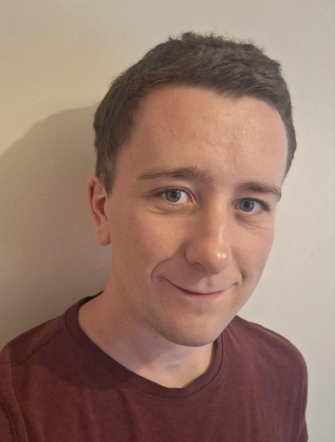
Dr Jonathan Hay obtained their doctorate in Science Fiction from the University of Chester and currently lectures in partnership with Bath Spa University, UK. They are an Environmental Humanities researcher with specialisms in Science Fiction and Critical Posthumanism, and an established member of the Beyond Humanism Network. Jonathan also has a Masters by Research in English, a bachelor’s degree in English Literature, and recently gained Fellowship of the UK’s Higher Education Academy in recognition of teaching expertise.
Jonathan is the author of Science Fiction and Posthumanism in the Anthropocene (Bloomsbury, 2025), a provocative monograph which reads Posthumanism not only as a theoretical framework that may be applied to Science Fictional ideas, but also an integral aspect of the dynamic and evolving interface extending between our mundane realities and the novelties of the Anthropocene. Jonathan is also author of Logopolis (Obverse Books, 2025); a novella-length critical exploration of the eponymous 1981 Tom Baker-led Doctor Who serial, published as #76 within the popular Black Archive range.
Jonathan’s research is highly interdisciplinary, including critical work on videogames and speedrunning, in addition to extensive Healthcare and Nursing research exploring themes pertaining to population and planetary health. Jonathan’s literary research likewise often privileges alternate methods of textual analysis, such as concordance analysis and autoethnography. They co-edited the feminist volume Talking Bodies Vol. II – Bodily Languages, Selfhood and Transgression (Palgrave, 2020), and have published numerous academic pieces on African SF and Afrofuturism, although they are painfully white. In any spare time, Jonathan works as a freelance editor.
Areas of Interest: Posthumanism, Feminism, Queer Theory, Science Fiction
Email: j[dot]hay[at]chester[dot]ac[dot]uk
Publications:
- Science Fiction and Posthumanism in the Anthropocene (London: Bloomsbury, 2025)
- The Black Archive: Logopolis (Edinburgh: Obverse Books, 2025)
- ‘‘Am I A Good Man?’: Regenerating Masculinity in Doctor Who’, in Masculinities in 21st-century Science-Fiction Television: Exploring the Holodeck, ed. Sara Martin and Michael Pitts (London: Bloomsbury, 2025)
- ‘(Il)legal Bodies: Activism, Climate Fictions, and Climate Culling’, in Language, Literature, and Interdisciplinary Studies, 6.4 (2024), pp. 18-28
- ‘Binti (Nnedi Okorafor, 2015) – Africanfuturism and the Meduse’, in Aliens: A Companion, ed. Simon Bacon and Elana Gomel (Oxford: Peter Lang, 2024)
- Jonathan Hay, Kate H. Knight, Mark Arnold, and Pamela Donaghy-Binks, ‘Broadening placement opportunities for nursing students through an indirect supervision model’, in BMC Nursing 23.491 (2024)
- Special issues of Hélice: Critical Thinking on Speculative Fiction on Speculative Landscapes (vol. 8.2; 2022 & vol. 9.1; 2023)
- ‘“Can I use the toilet?”: Watching Steven Moffat’s Doctor Who (2010-2017) as Posthuman Television’, in Journal of Posthumanism 2.3 (2022), pp. 193-204
- ‘“A lot of snow out of one cloud”: A Concordance Analysis of Ursula K. Le Guin’s Hainish Cycle’, in Hélice: Critical Thinking on Speculative Fiction 31.1 (2021), pp. 23-37
- ‘Neocolonial Auspices: Rethinking the Ekumen in Ursula K. Le Guin’s Hainish Cycle’, Journal of the Fantastic in the Arts 32.1 (2021), pp. 4-29
- ‘Novum Decay: Moving Beyond Humanism in Source Code’, Foundation: The International Review of Science Fiction 49.3 (2020), pp. 5-18
- ‘Fully Optimized: The (Post)human Art of Speedrunning’, Journal of Posthuman Studies: Philosophy, Technology, Media 4.1 (2020), pp. 5-24
- Talking Bodies Vol. II – Bodily Languages, Selfhood and Transgression, eds. Bodie A. Ashton, Amy Bonsall and Jonathan Hay (Palgrave, 2020)
- ‘Afrofuturism in clipping.’s Splendor & Misery’, Vector 289 (2019), pp. 38-44
- ‘(Post)human Temporalities: Science Fiction in the Anthropocene’, KronoScope: Journal for the Study of Time 19.2 (2019), pp. 130-152